
What Happens After You Decide?
We spend an enormous amount of time thinking about decisions before we make them.
We weigh options. We consult people we trust. We make lists, sometimes literally, sometimes in the private theater of our own heads at two in the morning. We agonize over the big ones — careers, relationships, moves, commitments — and we rush through the small ones without noticing. But in either case, the focus is almost always on the moment before the choice is made. That is where the drama lives. That is where the anxiety concentrates. That is where we believe the important thing is happening.
And then we decide, and something strange occurs.
We move on.
The decision is made, and our attention shifts immediately to the next thing — the next problem, the next question, the next demand. The choice itself recedes into the background, filed under "handled." We feel a brief sense of relief, or sometimes regret, and then the day continues. The decision becomes part of the past, and the past, as far as most of us are concerned, is settled.
But it is not settled. Not really.
Decisions do not end when they are made. They leave something behind — a kind of residue that continues to operate after the conscious attention has moved elsewhere. The choice you made last Tuesday about how to respond to a difficult conversation is still shaping how you enter the next one. The commitment you made six months ago that you have not revisited is still drawing on resources you may not realize you are spending. That recurring payment for AppleTV you purchased to watch Shrinking is still happening, long after Season Two ended. The thing you decided not to do — the call you did not make, the question you did not ask, the boundary you did not set — is still exerting a quiet pull on the system, even though you stopped thinking about it the moment you looked away.
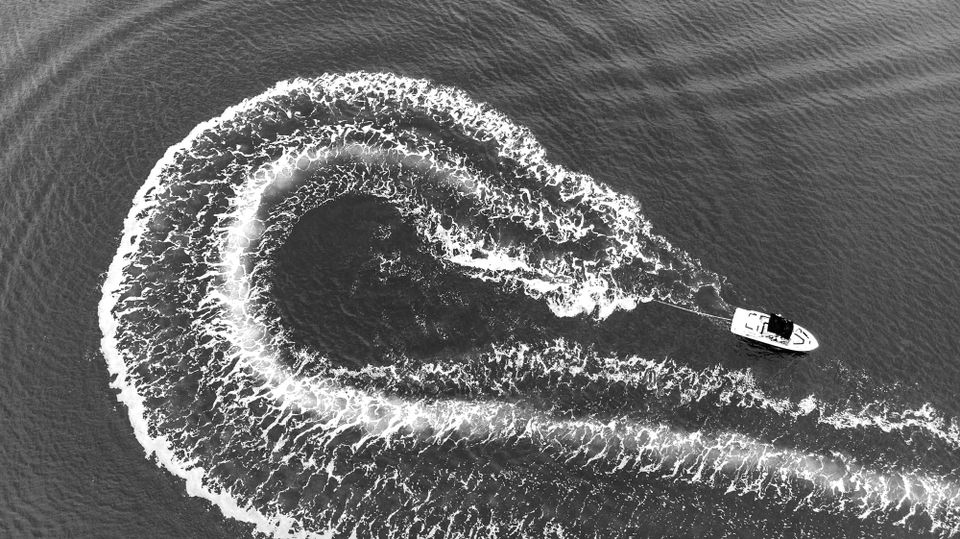
This residue is not dramatic. It does not announce itself. It accumulates the way dust accumulates — invisibly, gradually, and only noticeable when enough of it has gathered that something starts to feel heavy without an obvious cause.
The philosopher and mathematician Alfred North Whitehead had a way of describing this. He argued that every event becomes what he called a stubborn fact — not just an outcome, but a changed condition that enters the next moment as a new constraint. The past does not simply pass. It folds into the present as a shaping force. Each decision alters, however slightly, the landscape in which the next decision will be made.
This is not a poetic observation. It is a structural one. And it explains something that most productivity advice and decision-making frameworks quietly ignore: why someone can make reasonable choices, one after another, and still end up feeling lost.
"The many become one, and are increased by one."
— Alfred North Whitehead, "Process and Reality"
The residue is not the problem. The accumulation is. Not any single decision, but the compounding weight of decisions whose consequences were never examined, never integrated, never allowed to settle before the next one arrived. Each unprocessed choice adds another thin layer the system must carry. And the system — your attention, your energy, your sense of direction — has to carry all of it, whether you are aware of it or not.
People sometimes describe a feeling of heaviness they cannot quite locate. Nothing singular seems responsible. No one decision explains it. And yet the accumulated weight is there. They are carrying the accumulated residue of hundreds of decisions that were made and never metabolized — choices that were resolved on the surface but never integrated underneath.
The modern environment makes this worse, because it is optimized for throughput. The goal, implicitly, is to decide faster, to clear the queue, to move to the next item. But speed without integration is not efficiency. It is accumulation by another name. The faster you decide without processing, the more unintegrated residue builds. And the more residue builds, the harder it becomes to feel that any single decision actually matters — because the system is so loaded with what came before that nothing new can land with its full weight.
There is a reason that older ways of living often included some form of daily settling — a pause at the end of the day, a practice of sitting with what had happened before moving on. We tend to view those habits as quaint. But they may have been solving a problem we have only recently recreated at scale.
The question is not whether your decisions have consequences. Of course they do. The question is whether you have given those consequences anywhere to land — or whether they are still circling, waiting for a moment of attention that never arrives.
The answer may not be to make fewer decisions, or even to make them more slowly. It may simply be to remember that a decision has an afterlife—and to leave somewhere for that afterlife to become part of what comes next.
Loring Mortensen
Founder, The Eidetica Initiative