
What Survives Is What Regulates
There is a lesson that biology teaches quietly, and that most of us miss because we are looking for something more dramatic.
When we think about what allows something to survive — an organism, a relationship, a community, a civilization — we tend to reach for the obvious answers. Strength. Intelligence. Adaptability. Resources. Good timing. These answers feel satisfying because they align with the stories we tell about who succeeds and why.
But if you look carefully at what actually persists across time, the pattern is different.
What survives is not what is strongest. The strongest species are not the ones that have lasted longest.
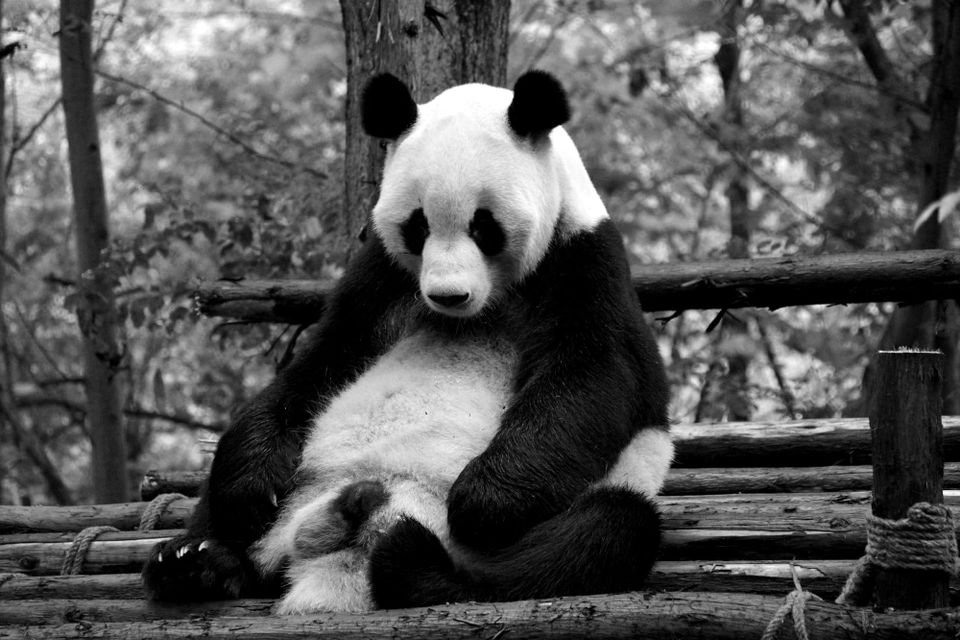
Exhibit A - The Giant Panda: the panda is a powerful animal. It is large, physically strong, and has incredibly powerful jaws. However, it has evolved to survive almost exclusively on bamboo. Because it is so specialized, it is highly vulnerable to environmental changes. If the bamboo forests disappear, the panda’s "strength" cannot save it.
Exhibit B - The Brown Rat: Physically, a rat is "weak" compared to most predators. However, rats are among the most successful species on Earth because they are adaptable. They can live in almost any climate, eat nearly anything, and reproduce rapidly. When their environment changes, such as the rise of human urbanization, they don't go extinct; they move into the sewers and basements and thrive.
What survives is not what is most intelligent. Many intelligent species have gone extinct, and many simple ones have endured for hundreds of millions of years.
Exhibit C - The Neanderthal: Neanderthals were highly intelligent, capable of making tools, using fire, and perhaps even symbolic thought. However, they were specialized for a specific climate and diet. When their environment changed rapidly and they faced competition, their high caloric needs and specialized lifestyle may have contributed to their extinction roughly 40,000 years ago.
Exhibit D - The Jellyfish: Jellyfish have no brain, no heart, and no complex central nervous system. Yet, they have drifted through the oceans for over 500 million years. Because they are biologically "simple" and require very little energy to survive, they have outlasted thousands of "smarter" species through five major mass extinctions.
What survives is not what is luckiest. Luck runs out.
Imagine two groups of beetles living on a volcanic island:
Exhibit E - Neon Green Beetles: These beetles are bright neon green. This color makes them incredibly easy for birds to spot and eat. They are poorly adapted to their environment.
Exhibit F - Dull Brown Beetles: These beetles are dull brown, perfectly camouflaged against the volcanic soil and bark. One day, the volcano erupts. By pure luck, the lava flow happens to wipe out the entire area where the brown beetles live, but stops just short of the patch of grass where the neon green beetles are sitting. At that moment, the green beetles are the "luckiest." They are the sole survivors.
Strongest, smartest, luckiest — none of it guarantees continuation.
What survives is what regulates.
Regulation is the quiet work of keeping the internal state of a system within the range that allows it to continue functioning. It is what a cell does to maintain its chemistry. It is what a body does to maintain its temperature. It is what a healthy relationship does to maintain trust. It is what a well-run institution does to maintain its mission. It is not spectacular. It is not heroic. It is rarely noticed. And without it, nothing else that matters can happen.
Regulation is what allows strength to be useful rather than destructive. It is what allows intelligence to produce coherent action rather than scattered brilliance. It is what allows luck, when it arrives, to be absorbed and compounded rather than squandered. Every other capacity depends on it.
The reason regulation is invisible is that it is most successful when nothing appears to be happening. A body that is regulating its temperature does not feel anything in particular. A relationship that is regulating its closeness does not feel like work. A society that is regulating its internal tensions does not look like it is doing anything at all. Regulation is the background condition that allows the foreground to be occupied by something other than survival.
This is why regulation is so often neglected. We attend to what is visible. We reward what is visible. We measure what is visible. And regulation, by its nature, resists visibility. It shows up only when it fails.
But when it fails, everything else begins to come apart. The body that stops regulating its temperature does not merely feel uncomfortable. It dies. The relationship that stops regulating its attention does not merely drift. It dissolves. The institution that stops regulating its purpose does not merely underperform. It hollows out. The civilization that stops regulating its internal coherence does not merely decline. It fragments.
The loss of regulation is not a dramatic event. It is a quiet shift that only becomes visible when the consequences have already arrived.
What this means, for anyone thinking carefully about their own life or about the systems they are part of, is that the most important work is usually the least interesting. The habits that maintain attention. The rhythms that maintain rest. The small rituals that maintain connection. The periodic returns to purpose that keep doing connected to why. These are not decorations on a life well lived. They are the architecture of whether a life holds together at all.
The same is true at every other scale. What endures is not what wins. What endures is what regulates itself long enough to keep existing — and in keeping existing, slowly accumulates the conditions under which something more than survival becomes possible.
This is not a dramatic insight. It is not a rallying cry. It does not promise transformation or breakthrough. It offers only a small, stubborn observation that has held across billions of years of biological history and across every civilization that has ever been studied.
What survives is what regulates.
Everything else is aftermath.
Loring Mortensen
Founder, The Eidetica Initiative