
The Cost of Keeping Your Options Open
There is a particular kind of exhaustion that comes not from doing too much, but from deciding too little.
You have felt it. The new house search that stretches into its third month because no place is quite right. The career conversation you keep having with yourself that never arrives at a conclusion. The invitation you haven’t accepted or declined because you’re not sure what else might come up. The three browser tabs you have kept open since Tuesday because each contains something you are not ready to deal with but do not want to lose.
None of these, individually, seems like a problem. Keeping your options open is, after all, what sensible people do. It is practical. It is flexible. It preserves freedom. Close a door too early and you might miss something.
But there is a cost to open doors that no one talks about, and it is not hypothetical. It is happening right now, in the background, whether you are aware of it or not.
Every unresolved option requires maintenance.
Not dramatic maintenance — not the kind that announces itself as stress or anxiety. Something quieter. Each open possibility can occupy a small amount of cognitive space. It is as though it sits in a queue somewhere in the system, waiting to be resolved, drawing just enough attention to prevent full release. One open question is manageable. Five are noticeable. Twenty can produce a hum of low-grade irresolution that most people experience not as a specific problem but as a general feeling of being slightly behind, slightly scattered, slightly unable to focus fully on anything — because nothing has been fully closed.
This is not a failure of discipline. It is a structural consequence of how unresolved possibility works.
Nearly a century ago, psychologist Bluma Zeigarnik noticed something curious about unfinished tasks: people tended to remember interrupted work better than work they had completed. The finding eventually became known as the Zeigarnik effect. Later research has complicated the original idea, but the basic observation remains suggestive: unfinished intentions can remain unusually available to attention.
"Nothing is so fatiguing as the eternal hanging on of an uncompleted task."
— William James
James was writing about unfinished tasks, and Zeigarnik was studying interrupted ones. But there is a related category that is easier to overlook: things we have deliberately left undecided. They are not unfinished because we forgot about them. They are unfinished because we continue paying to preserve the possibility of choosing them later.
What makes this particularly relevant now is that modern life has massively expanded the number of options that can remain simultaneously open. Technology and social changes have dramatically increased accessible optionality in many domains.
A person looking for a house fifty years ago might have considered what was available in a handful of neighborhoods. Today, from a sofa in Greensboro, someone can seriously contemplate moving to Asheville, Upstate New York, Costa Rica, or a village in southern France before breakfast.
And the alternatives do not disappear after you choose. Buy the house and Zillow keeps showing you other houses. Take the job and LinkedIn keeps showing you other jobs. Book the hotel and another site offers you ten places you might have liked better.
Now, almost everything can remain open. You can browse real estate options in four cities. You can maintain six half-started projects. You can keep three potential relationships in a holding pattern. You can leave every major life question tentatively unanswered while telling yourself you are simply being thoughtful, or just need more information.
And the system pays for all of it.
Not in one large invoice, but in a continuous background tax on attention, clarity, and the capacity to be fully present to anything. Because presence requires a certain amount of closure. You cannot give yourself entirely to what is in front of you if part of you is still maintaining a portfolio of things you have not yet decided about.
This is the hidden inversion at the center of the idea of optionality. We treat open options as freedom — and in one sense, they are. But every open option is also a small, ongoing act of not-deciding. And not-deciding is not the same as waiting. It is active. It draws resources. It adds weight.
There is an important difference between leaving something open and deliberately waiting. Sometimes waiting is the decision. You do not have enough information yet, the conditions are still changing, or the right moment has not arrived. That kind of waiting has direction. Indefinite optionality does not. It preserves possibility without deciding what the possibility is being preserved for.
The problem is not that options are bad. Options are valuable precisely because they preserve possible futures. But preserving a possible future is not free.
Decisions leave residue. But non-decisions do too—and of a different kind. A completed decision allows the system to begin incorporating whatever follows. An unresolved one can remain suspended, generating carrying cost without producing movement.
There is a reason that people sometimes feel a wave of relief after making a decision they had been postponing — even when the decision itself is difficult or the outcome uncertain. The relief is not because they chose correctly. It is because something finally closed, and the system was allowed to stop maintaining it.
That relief is information. It is telling you what the open option was actually costing.
Storage units make this logic unusually visible. We put away a $200 piece of furniture because we might need it someday, then quietly spend $40 a month preserving the option. A year later, we’ve paid more to maintain the possibility of using the furniture than the furniture was ever worth.
We rarely calculate our unresolved decisions the same way.
The question worth sitting with is not whether you have too many options — you almost certainly do, and that is unlikely to change. The question is whether you have noticed what it costs to keep them all alive and open. And whether some of them have been open long enough that the cost of maintaining them has quietly exceeded whatever value they were preserving.
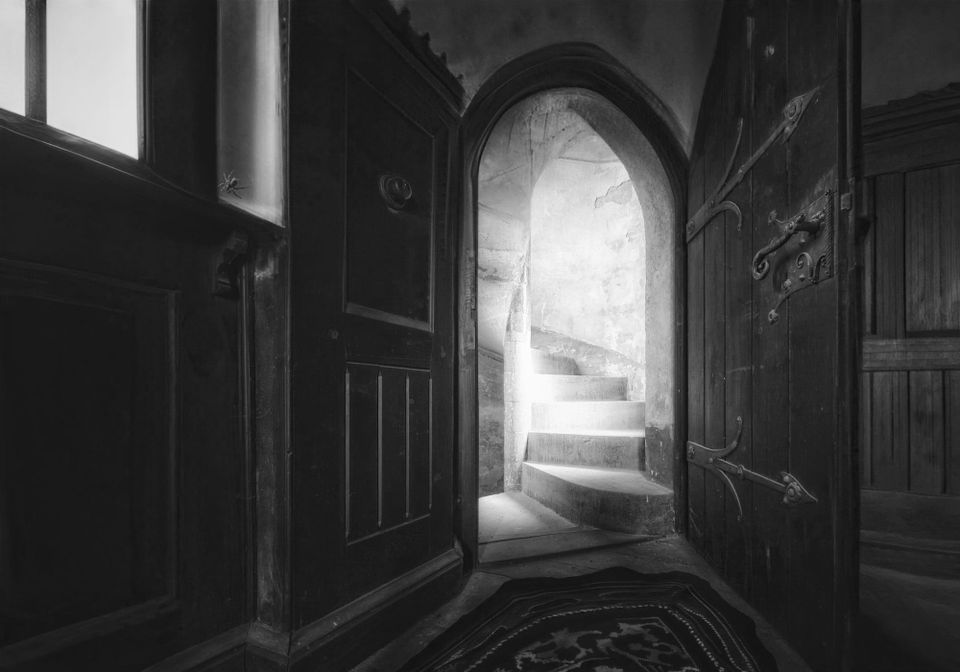
Not every door needs to be closed. But every open door needs to be carried.
And you are the one carrying them.
Loring Mortensen
Founder, The Eidetica Initiative